
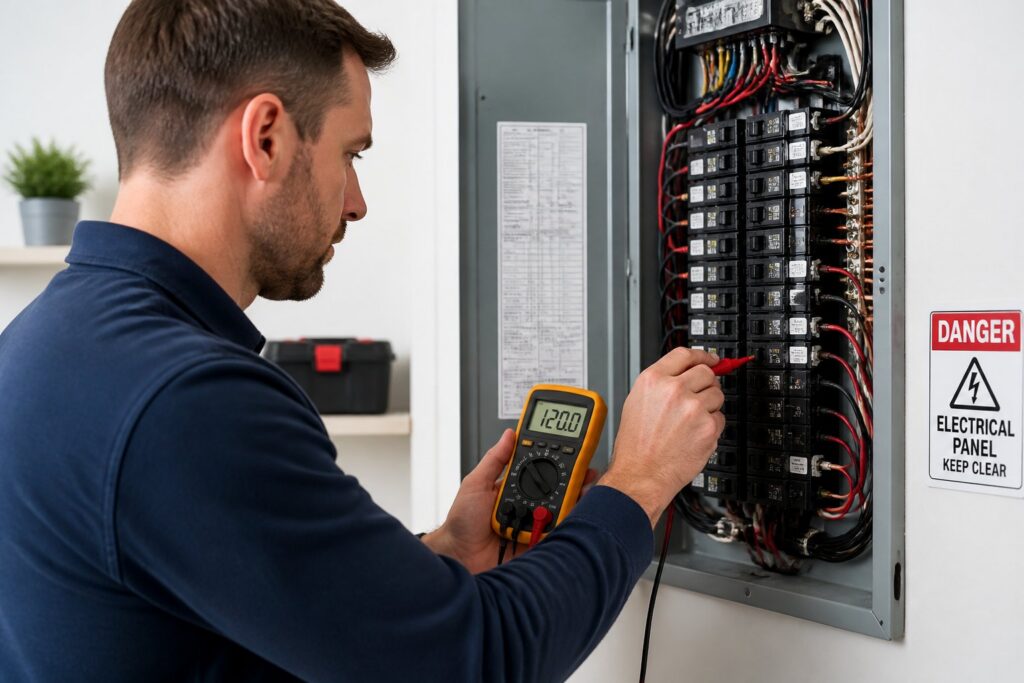
A breaker that trips every now and then is just doing its job. But if your breaker keeps tripping, it’s trying to tell you something about the wiring or what’s plugged in. If you’re hoping to prevent nuisance breaker trips, the first step is figuring out the real cause—instead of just flipping it back on and crossing your fingers.
This isn’t just a home thing—it happens at work, too. Kitchens packed with gadgets, home offices with power strips everywhere, or businesses running motors can all push a circuit too far, especially during busy hours. Sometimes you can fix it just by moving a few things to another outlet. Other times, it’s older wiring, a tired breaker, or a panel that really needs an electrician’s attention.
What A Nuisance Trip Usually Means
A nuisance trip happens when the breaker pops open out of nowhere, even though you’re not running much. Sometimes that’s just the protection working like it should. But if it keeps happening, there’s probably something going on behind the scenes that needs checking out.
Normal Protection Vs. Repeated Interruptions
Breakers are supposed to trip when circuits get overloaded, shorted, or there’s a ground fault. That’s how they keep your place safer—by cutting the power before the wires get too hot. One trip after plugging in too much? That’s normal.
But if the same breaker keeps popping, that’s a red flag. Maybe the circuit’s too small for how you use it, or there’s a loose wire, a device going bad, or an extra-sensitive AFCI or GFCI.
Why Breakers Trip Even When Nothing Seems Wrong
A circuit might look fine but still have issues. Loose wires, worn-out outlets, old cords, or a breaker that’s just seen better days can all make breakers trip without any obvious clues. In older houses, you’ve also got circuits that were never designed for today’s load—think TVs, chargers, computers, and kitchen gadgets.
Sometimes, a motor starting up causes a brief surge. Air conditioners, fridges, garage doors, sump pumps, and commercial gear all pull a lot of power at startup. If the circuit’s already close to maxed out, that spike can be enough to trip the breaker.
The Most Common Causes Inside A Building
Most repeat trips start with regular electrical use, not some big dramatic failure. Usually, it’s too much plugged into one circuit, older parts that are past their prime, or protective devices reacting to tiny faults or power blips.
Overloaded Circuits From Everyday Devices
This is one of the top reasons for breaker trips. Plug in too many things, and the current goes over the breaker’s limit. You’ll notice it when you’re running the microwave, toaster, coffee maker, space heater, or vacuum at the same time.
In homes around Austin, Round Rock, Cedar Park, and nearby, I see this a lot in kitchens, home offices, and garages. The circuit seems fine—until everyone’s home and everything’s on. That’s when the breaker flips to protect you.
Loose Connections And Aging Components
Loose wires, a worn breaker, or tired outlets can cause heat and make a circuit act up. You might not spot the damage at first, but the breaker starts tripping more as things get worse. This pops up in older homes, storefronts, and places with a lot of patchwork repairs.
If a breaker feels hot, plugs are loose, or lights flicker when something turns on, those are signs the circuit needs a closer look.
Sensitive AFCI And GFCI Protection
AFCI and GFCI devices are there to protect people and property, but they can trip from weird wiring, moisture, appliance noise, or a device leaking just a little current. It’s annoying when the trip seems random, but often the device is picking up on something real.
These are everywhere in newer homes—kitchens, baths, garages, laundry, outside. If you just keep resetting them but never fix the root issue, the tripping comes back.
Appliances And Equipment With High Startup Demand
Motors and compressors pull a big surge of power when they kick on. Fridges, freezers, ACs, well pumps, shop tools, and even some office gear do this. If the circuit’s already busy, that surge can push it over the edge.
Businesses see this with HVAC units or gear that cycles on and off. Homeowners notice it with pool pumps, big fans, or older appliances that don’t start as smoothly anymore.
Steps To Reduce Repeat Trips
You can cut down on nuisance trips with a few practical habits. The idea is to lighten the load, get rid of weak spots, and keep problem devices separated from the rest.
Spread Loads Across Different Circuits
Try not to put all your heavy-use devices on the same breaker. In kitchens, keep the toaster, coffee maker, and microwave off the same strip or outlet branch. In offices, spread computers, printers, and chargers around.
It’s a simple fix, but it works. Not sure which outlets are on which breaker? Label them during a regular day and note when trips happen.
Unplug Problem Devices To Isolate The Source
If a breaker keeps tripping, unplug devices one by one and see if it stops. Sometimes it’s just one bad appliance, cord, or power strip causing chaos. I’ve lost count of how many times the breaker got blamed, but it was really a busted device.
This trick works for homes and small businesses alike. When the tripping stops, you know where to look next.
Replace Worn Cords, Plugs, And Receptacles
Frayed cords, bent plugs, loose outlets, and heat-damaged receptacles can cause bad contact—leading to arcing, heat, and more trips. If a plug falls out easily or a cord gets hot, swap it out instead of working around it.
Upgrading outlets and switches can boost safety and save headaches. In older Central Texas homes, replacing worn devices really does make things more reliable.
Use Dedicated Circuits For Heavy Electrical Loads
Some gear just shouldn’t share a circuit with regular outlets. Big appliances, HVAC, EV chargers, and certain business equipment work best on their own circuit. That cuts down on overloads and helps things run smoother.
If you’re adding something new, have a licensed electrician check if the circuit, wire size, and panel can handle it before you run into trouble.
Home And Business Upgrades That Help
If the basics aren’t enough, some upgrades can make your system both safer and more reliable. A better panel, newer wiring, or updated outlets can help you keep up with modern demands.
Panel Upgrades For Modern Power Needs
If your panel’s full, outdated, or too small, you’ll keep fighting breaker trips no matter how careful you are. Upgrading the panel gives your place the power it needs for today’s appliances, smart tech, EV chargers, and everything else. It also helps cut down on overheating and other stresses.
For businesses, a stronger service means lights, office gear, refrigeration, and HVAC can all run with fewer interruptions. That’s a big deal when downtime costs money.
Wiring Improvements In Older Properties
Older wiring can still work, but it’s not always up for today’s electrical needs. Damaged insulation, outdated materials, or small circuits cause more trips and safety headaches. Upgrading wiring makes the whole system more stable and easier to maintain.
In older homes around Westlake, Lakeway, Bee Cave, and Dripping Springs, fixing problem circuits beats swapping breakers again and again. It’s safer and sets you up for future upgrades.
Outlet And Switch Upgrades For Safer Performance
Loose, cracked, or old outlets cause trouble even when the breaker’s fine. Swapping them for properly rated ones improves contact and cuts down on heat. Same goes for switches that feel warm, crackle, or act up.
It’s also a good time to add the right type of outlet for the spot. Kitchens, baths, garages, laundry, and outdoor areas all benefit from updated protection and better parts.
Surge Protection For Sensitive Electronics
Small surges and power noise can mess with sensitive electronics—and sometimes even cause nuisance tripping. Whole-house surge protection soaks up extra voltage before it spreads. That helps protect computers, smart devices, entertainment systems, and more.
Homes and businesses with lots of electronics really benefit from surge protection, and it can help AFCI and GFCI devices last longer. It’s a smart upgrade with long-term perks.
When Tripping Points To A Bigger Safety Issue
A breaker trip isn’t always just an overload. Some warning signs mean you need to act fast—think heat, moisture, or failing equipment.
Burning Smells, Heat, And Buzzing Sounds
If you smell burning plastic, feel heat at a panel or outlet, or hear buzzing from a breaker, stop using that circuit right away. Those signs often mean loose wires, bad insulation, or a failing breaker. Don’t just keep resetting it and hoping for the best.
These issues can get worse quickly. Call a licensed electrician to check it out before you use it again.
Moisture Exposure Near Kitchens, Bathrooms, Or Outdoors
Water and electricity? Bad combo. GFCIs might trip when they sense moisture, and that’s usually protecting you from shocks. Outdoor outlets, bathroom circuits, laundry, and kitchen counters are common trouble spots.
If the trip happened after rain, cleaning, a leak, or a spill, check for moisture before turning the power back on. If it keeps happening, the wiring or device probably needs repair.
Commercial Equipment And HVAC Related Warning Signs
For businesses, repeated trips tied to HVAC, refrigeration, or production gear are a big deal. It could be a bad motor, weak connection, overloaded circuit, or a mismatched protection device. Every trip interrupts work and stresses the equipment.
If a breaker pops when a big unit starts, or it happens more during busy times, you probably need a pro to test the circuit. Central Texas buildings are growing fast, and demand just keeps going up.
When To Call A Licensed Electrician In Central Texas
Some troubleshooting is safe—like unplugging stuff or figuring out which device is the culprit. Anything involving panels, wiring, or trips you can’t explain? That’s a job for a licensed electrician.
Problems That Need Professional Electrical Troubleshooting
Call for help if the same breaker keeps tripping after you’ve lightened the load, if you notice heat or burning smells, or if outlets and switches are worn out. An electrician can test the load, check for loose wires, inspect the breaker, and see if your setup still fits your needs. That’s really helpful when things seem random.
Frequent trips could mean a worn-out breaker or a circuit that needs repair—not just a reset. Getting it diagnosed right the first time saves trouble down the road.
How Local Conditions And Growth Affect Electrical Demand
Central Texas homes and businesses often use way more power than older systems can handle. Summer AC, EV charging, home offices, smart gear, and new appliances all push circuits harder. As places grow and usage changes, the old setup might not keep up.
That’s why electrical maintenance, safety checks, and planning matter. What worked years ago might need an update now to stay reliable.
What Property Owners In Austin Area Communities Should Expect
If you own property in Austin, Spicewood, Bee Cave, Lakeway, Dripping Springs, Georgetown, Leander, Round Rock, Cedar Park, Kyle, Liberty Hill, Hutto, or any of those Central Texas spots, local electricians will focus on both safety and capacity. Usually, that means breaker testing, panel checks, outlet and switch upgrades, wiring fixes, surge protection, and sometimes adding dedicated circuits.
For homes and businesses with repeated breaker trips, having a troubleshooting plan really helps. You’ll end up with safer power, fewer headaches, and a setup that’s just better for daily life.
Frequently Asked Questions
What does it mean when a circuit breaker trips even though nothing seems wrong?
Most of the time, the breaker reacts to a load spike, a hidden fault, or a device pulling more current than you’d expect. The issue isn’t always obvious until you test the circuit under normal use. If breakers keep tripping, it’s probably time to check for a real electrical problem.
What are the most common causes of frequent breaker trips in a home?
Overloaded circuits, short circuits, ground faults, loose connections, and worn-out breakers top the list. In real homes, I see problem cords, old outlets, and appliances with high startup demand—kitchen and laundry circuits seem to act up the most.
How can I tell if a breaker is tripping due to overload, a short circuit, or a ground fault?
If too many devices run at once, you’ll usually get an overload, and the trip might come after a while. Short circuits or ground faults tend to trip breakers instantly, especially when you flip something on or plug it in. If you can’t figure out the pattern, an electrician can test it safely.
Why do AFCI breakers trip unexpectedly, and what can I do to reduce false trips?
AFCI breakers might trip because they spot arc-like conditions from loose connections, damaged cords, or some appliance motors. They can also react to sensitive electronics or noisy loads. Try checking cords, swapping out worn devices, and making sure the wiring is in good shape to cut down on nuisance trips.
Why would a GFCI or RCD trip randomly, and how can I troubleshoot it safely?
Usually, a GFCI or RCD trips when it senses current leaking somewhere it shouldn’t—think moisture, a bad appliance, or damaged wiring. You can unplug devices one at a time to see if the tripping stops, then check for water or a bad cord. If it keeps happening, it’s probably time to call in a pro.
What steps can I take to reduce breaker trips when using appliances with motors or high startup current?
Try plugging those appliances into their own dedicated circuit if you can, and don’t run a bunch of power-hungry devices all at once. Take a look at the cords, plugs, and outlets—if anything’s loose or worn out, that can really mess things up when you turn something on. Still getting trips? You might need to think about upgrading your panel or circuits.