
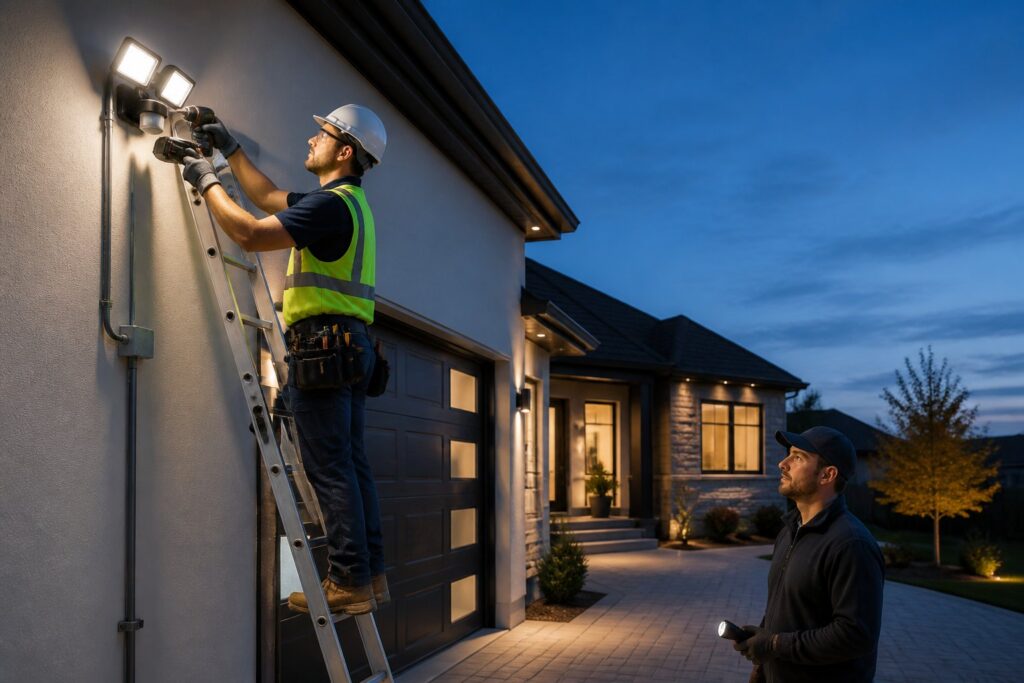
You can figure out how to install outdoor security lighting systems safely by planning your layout, picking the right fixtures, and following careful wiring and mounting steps. A thoughtful setup lights up the spots where trouble’s most likely, but also keeps glare, wasted energy, and electrical risks in check.
The safest systems are the ones you plan before you drill, wire, or mount anything. If you take the time to map your property, check power needs, and seal every outdoor connection, your lights just work better and last longer.
For many homes and small businesses, you can handle the job if you’ve got some basic skills. But if you’re dealing with complicated wiring, changing panels, adding smart controls, or working on a commercial property, you might want a licensed electrician who can manage the project from start to finish.
Planning the Lighting Layout
Start with a simple site plan. Walk around your place at night and look for dark spots, blind corners, and places where someone could sneak up without being seen.
Think about where you actually need light, not just where it looks good. Good security lighting usually covers doors, driveways, garages, side yards, and any path people use after dark.
Identifying High-Risk Exterior Areas
Focus on entry points first—front doors, back doors, patio doors, garage service doors. You want clear visibility and quick light there.
Don’t forget side yards, basement steps, sheds, and fences near alleys or woods. If someone could hide out there, throw some light on it.
Choosing Coverage for Entry Points and Pathways
Aim for even coverage, not just one big spotlight. Pathways need enough light for safe walking, and door areas need broader coverage so you can see faces and hands.
Overlap light patterns just a bit. That helps cut down on dark gaps and makes motion sensors and dusk-to-dawn settings work better.
Selecting Fixtures and Control Options
Your fixture choice really affects how well the system works and how much hassle it’ll be to maintain. You’ll want controls that fit your habits—because honestly, the best light is the one you actually use.
LED fixtures are usually the way to go for most people. They use less power, stay cooler, and last longer than the old bulbs. Control style matters, too—some areas need motion activation, others just need steady nighttime coverage.
Motion Sensor Lights vs. Dusk-to-Dawn Fixtures
Motion sensor lights pop on when they detect movement, which saves energy and draws attention to activity. They’re great near doors, garages, driveways, and side yards.
Dusk-to-dawn fixtures stay on from evening until morning. They’re best for areas where you want constant visibility, like along long driveways or dark corners that stay exposed all night.
LED Performance, Brightness, and Color Temperature
Pick LEDs that are bright enough for the space but don’t blind anyone. Too little light leaves shadows, but too much can actually make it harder to see what’s going on.
Cooler white light—usually in the 4000K to 5000K range—feels crisp and clear, which works well for security. Warmer light is easier on the eyes, but it might not give you the same sharp detail.
Power Source and Circuit Requirements
Before you start installing, check how you’ll get power to the lights and whether your current circuit can handle the load. This is a big deal when you want to install outdoor security lighting systems safely.
Use components rated for outdoor use, and make sure the circuit is protected to cut down shock risk in wet conditions. If the wiring looks old, crowded, or damaged, stop and inspect before adding anything.
Hardwired Systems and Existing Electrical Capacity
Hardwired lights give you a solid, reliable setup, but they need to connect to a box and circuit that can safely handle the load. If the circuit already runs a lot of stuff, adding more lights could be pushing it.
Check the panel label, breaker size, and total wattage. If you’re not sure the circuit can handle it, a licensed electrician can double-check and suggest the safest move.
Weather-Resistant Components and GFCI Protection
Go for weather-resistant boxes, covers, fixtures, and cable connectors made for outdoor use. Indoor parts just don’t last outside—they break down fast in moisture and temperature swings.
GFCI protection matters a lot for outdoor circuits. It helps shut power off if a ground fault happens, which is extra important anywhere near rain, sprinklers, or damp ground.
Safe Installation Steps
Safety first. Turn off power at the breaker, double-check that the circuit is dead, and use a sturdy ladder before you start mounting or wiring.
Don’t rush placement or sealing. Many headaches come from quick cuts, loose fittings, or wire connections that aren’t protected from water.
Mounting Height and Beam Direction
Mount fixtures high enough to cover the area, but low enough to aim them where you want. Usually, that means placing them so they cover a door, driveway, or walkway without blasting light into windows or your neighbor’s yard.
Aim the beam a bit downward. That helps you see the ground better and cuts down on glare, so the lights are useful—not just annoying.
Running Wiring and Sealing Outdoor Connections
Use outdoor-rated wiring and run it through approved conduit or protected paths. Keep cables clear of sharp edges, moving gates, and spots where water pools.
Seal every outdoor connection with the right box, gasket, and fitting. If water gets in, corrosion and failure follow fast.
Testing, Adjustment, and Ongoing Upkeep
Once everything’s up, test every light after dark, with motion, and during regular nighttime use. Sometimes a system looks perfect in daylight but still leaves weird shadows at night.
Small tweaks go a long way. Sensor angle, timer settings, and fixture aim usually need a couple rounds of adjustment before things feel just right.
Aiming Sensors to Reduce False Triggers
Point motion sensors away from busy roads, swaying trees, and heat sources like vents or dryer exhaust. Those things can trigger the lights for no good reason.
If the lights keep going off for nothing, dial back the sensitivity or narrow the sensor’s field of view. If they’re missing real movement, open up the angle or nudge the sensor a bit.
Routine Cleaning, Bulb Checks, and Seasonal Inspections
Wipe down lenses and sensor covers every few months so dirt and pollen don’t block the light. Even a little grime can cut brightness more than you’d think.
Check for loose mounts, cracked seals, and flickering lights when the seasons change. After heavy rain, storms, or freezing weather, look for corrosion, water getting in, or fixtures that have shifted.
Frequently Asked Questions
What type of outdoor security lights should I choose for my home?
For most homes, LED motion sensor lights work well near doors, garages, and side yards—they save energy and react fast. If you want steady light all night, dusk-to-dawn fixtures are better for driveways and open spaces.
Where are the best places to mount security lights around a property?
Best bets are front and back entries, garage doors, driveways, side yards, walkways, and any dark corner where someone could sneak up or where you need safe footing after dark.
Do I need a junction box and conduit for outdoor lighting, or can I use surface-mounted wiring?
Outdoor fixtures need to connect to a proper junction box, and exposed wiring should go in conduit or another approved outdoor method. Surface-mounted wiring without protection is just asking for trouble with damage, moisture, and code issues.
How do I safely connect outdoor lights to an existing power source?
Shut off the breaker, make sure the circuit’s dead, and only connect to a box and circuit rated for outdoor use. If the circuit’s overloaded, wiring is old, or the panel setup is confusing, let a licensed electrician handle it.
What weatherproofing steps should I take to prevent water damage and corrosion?
Use outdoor-rated fixtures, boxes, gaskets, connectors, and conduit, and seal every opening carefully. Keep wire connections raised, snug, and protected so rain and condensation can’t sneak inside.
How do I set up motion sensors and adjust the sensitivity and timer settings?
Start with a medium sensitivity. Try the light at night—just walk through the spot and see how it reacts. If it’s too jumpy or not catching you soon enough, tweak the sensitivity a bit. Set the timer so the light sticks around long enough for you to move safely, but not so long that it’s wasting energy or bugging the neighbors.
If you’re tired of wrestling with outdoor security lighting or just want someone else to deal with it, Magnify Electric’s team can help. We handle everything: simple fixture swaps, full electrical upgrades, commercial lighting, safety checks, smart home setups, and even emergency electrical fixes. Our licensed electricians know their stuff—automated lighting, ceiling fans, switches, Lutron smart systems, EV charging outlets, wall chargers, outlet repairs, recessed lighting, TV mounting, surge protectors, wiring, lighting installs, panel work, troubleshooting, portable generator hookups, smoke and CO₂ detectors, and just about any electrical upgrade you can think of for homes or businesses.
You’ll find us working all over Central Texas—Spicewood, Austin, Bee Cave, Lakeway, Dripping Springs, Georgetown, Leander, Round Rock, Kyle, Cedar Park, Liberty Hill, Westlake, The Hills, Briarcliff, Horseshoe Bay, Sunset Valley, Hutto, and a bunch of nearby spots.