
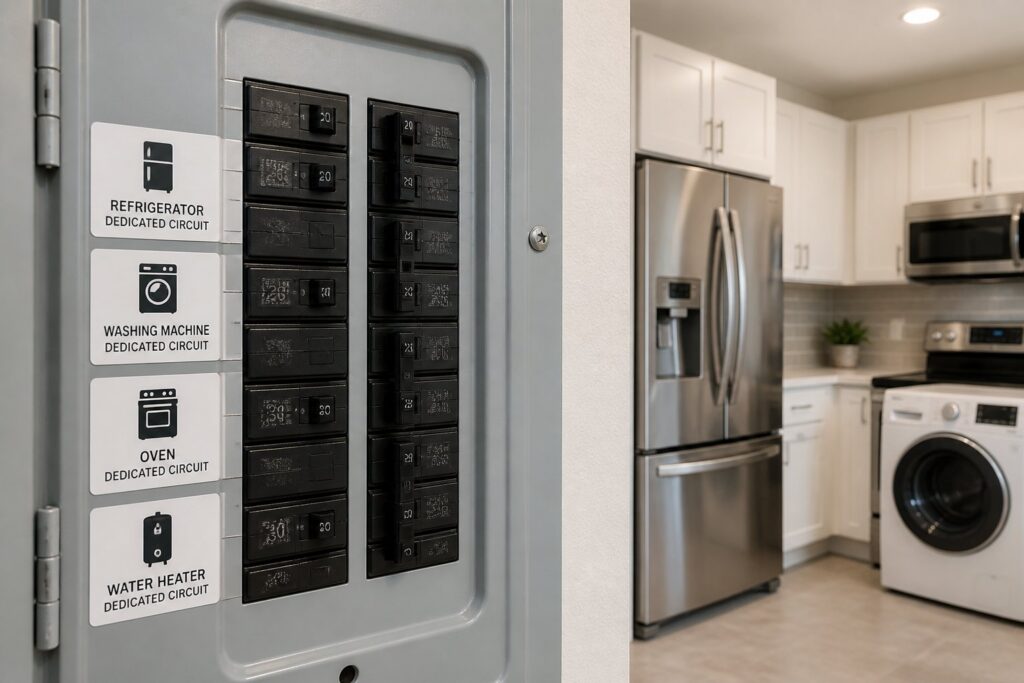
So, why are dedicated circuits important for modern appliances? It really comes down to safety, steady performance, and keeping your home or building protected for the long haul. When one appliance has to share power with others, the circuit can get pushed past its limits—especially with all the heavy loads we use these days.
In older homes, this problem might stay hidden for years. Then you plug in a new microwave, EV charger, laundry unit, or HVAC add-on, and suddenly the weak spots show up. You’ll see it as tripped breakers, dimming lights, warm outlets, or equipment that just doesn’t run right. A dedicated circuit gives one appliance its own power path, so it can run safely and consistently.
If you’re planning an upgrade, remodel, or chasing down an electrical issue, this should be one of the first things a licensed electrician checks. Here in Central Texas, I see this all the time during panel upgrades, outlet swaps, new lighting, and EV charger installs, especially around Austin, Lakeway, Bee Cave, Dripping Springs, Georgetown, Leander, Round Rock, Cedar Park, Kyle, Liberty Hill, Westlake, Hutto, and nearby spots.
What A Dedicated Circuit Actually Does
A dedicated circuit is basically a single power line set aside for just one appliance or device. That means it gets the full capacity of the breaker and wiring—no fighting with other outlets or loads on that line.
How It Differs From Shared Branch Circuits
A shared branch circuit powers a bunch of outlets or devices at once. That’s fine for stuff like lamps or phone chargers, but it can get dicey when you start plugging in heavier appliances.
A dedicated circuit keeps that load separate. In real life, that means fewer interruptions, less stress on your wiring, and better protection for both the breaker and your appliance.
Why High-Demand Equipment Needs Its Own Power Path
High-demand gear—think refrigerators, ovens, air conditioners—pulls more current for longer stretches. They need steady voltage to work right.
If those loads share a circuit, performance drops and the risk of overload goes up. A dedicated path lets the appliance do its job as intended and helps stop those annoying shutdowns.
How Modern Homes And Buildings Outgrow Older Wiring
Today’s electrical needs are a whole different beast compared to what older homes were built for. New appliances, smart home systems, comfort upgrades—they all pile on the load.
The Rise Of EV Chargers, HVAC Add-Ons, And Smart Devices
EV chargers, heat pumps, smart thermostats, networking gear, security systems—they all add up. Maybe each device doesn’t seem like much, but together, the demand can become a real problem.
I see this a lot during service calls in growing neighborhoods and remodeled homes. A place that once handled basic lighting and a few appliances might suddenly need dedicated circuits, a bigger panel, or surge protection just to keep up.
Why Renovations Often Increase Electrical Load
Renovations bring in better appliances, extra outlets, and better lighting. That’s great, but it usually means you’ll need more circuits to keep things safe.
Kitchen remodels, laundry upgrades, garage workshops, home offices—they all change how you use power. If the wiring doesn’t get updated too, you can feel overloaded from day one.
Appliances And Equipment That Commonly Need Separate Power
The biggest trouble spots are pretty obvious once you look at how much power the equipment needs. Kitchens, laundry rooms, mechanical systems, and specialty gear all benefit from dedicated circuits.
Kitchen And Laundry Equipment
Kitchen appliances—microwaves, dishwashers, fridges, electric ovens—usually need their own circuits. Same goes for laundry gear like washers and dryers, since they create heavy, repeated loads.
These areas see big power swings, so they’re common places for breaker trips. A dedicated circuit helps keep things stable, whether you’re cooking, cleaning, or just keeping food cold.
HVAC Systems, Water Heaters, And Sump Pumps
HVAC units, electric water heaters, sump pumps—they need steady, reliable power because they protect comfort or property. If one of these shuts off at the wrong time, it’s more than just annoying.
A separate circuit cuts down on interruptions and keeps these systems ready when you actually need them. That’s important for homes and businesses alike.
Commercial Equipment And Specialty Installations
Commercial kitchens, office equipment, server racks, shop tools, specialty machines—they often need their own circuits. If the load is high or sensitive, don’t let it share with unrelated stuff.
Same idea for generator hookups, lighting controls, and some smart building systems. Dedicated power paths make troubleshooting way easier and help protect your investment.
Safety Risks When Heavy Loads Share The Wrong Circuit
The biggest risk of sharing a circuit isn’t just inconvenience. It’s heat, overload, and a bigger chance of electrical damage over time.
Frequent Breaker Trips And Overheating Wires
Breaker trips usually mean a circuit’s carrying too much. If the same breaker keeps tripping, odds are the circuit’s overloaded—not broken.
Wires can heat up when too many devices pull power at once. That warmth? It’s your warning sign.
Voltage Drop, Nuisance Shutdowns, And Fire Concerns
When a circuit is stretched too thin, voltage drops. You’ll see lights dim, motors struggle, appliances shutting down or resetting for no clear reason.
These little problems point to real strain on your system. In the worst cases, overloaded wiring can raise your fire risk. If you keep seeing these symptoms, don’t wait around.
Common Warning Signs Property Owners Should Not Ignore
- Breakers trip more than once
- Outlets or switches feel warm
- Lights dim when large appliances start
- Appliances restart or shut off unexpectedly
- Burn marks, buzzing, or a hot smell near outlets
If you notice any of these, book an electrical inspection soon. A licensed electrician can track down the load and figure out if you need a dedicated circuit, outlet upgrade, or panel repair.
Performance, Efficiency, And Equipment Protection
Dedicated circuits do more than just cut down risks. They help your equipment work the way it’s supposed to.
Why Stable Power Helps Appliances Run As Designed
Appliances work better when they’re not fighting with other devices for power. Stable power means motors start smoothly, heating elements stay consistent, and electronic controls behave.
That’s a big reason dedicated circuits are so handy for high-efficiency appliances and modern systems. They’re less likely to act up when the load’s isolated.
The Connection To Surge Protection And Panel Capacity
Dedicated circuits pair well with whole-home surge protection and a properly sized panel. Each layer keeps equipment safer from spikes, overloads, and bad power distribution.
If your panel’s already full or outdated, adding just one circuit might not cut it. Sometimes you need a panel upgrade, new breakers, or better wiring to really support the load.
Long-Term Value Compared With Repeated Troubleshooting
Constantly resetting breakers and hoping for the best? That just leads to more service calls, wasted time, and extra stress.
A well-installed dedicated circuit usually saves money over time by cutting down on troubleshooting and protecting your appliances. It’s a practical upgrade, not just a code requirement.
When To Call A Licensed Electrician
Adding a major appliance? Remodeling? Seeing overload symptoms? Time to call a pro. Dedicated circuit work isn’t the place to guess.
Projects That Often Require Circuit Additions
- EV charger installation
- Kitchen remodels
- Laundry room upgrades
- HVAC replacements or add-ons
- Water heater replacement
- Basement, garage, or workshop buildouts
- New lighting with heavy fixtures
- Smart home system expansions
These jobs usually need more than just a new outlet. You might be looking at outlet and switch upgrades, a panel check, or wiring improvements too.
What A Professional Evaluation Typically Checks
A licensed electrician checks breaker size, wire gauge, load demand, outlet condition, grounding, and panel capacity. They want to make sure your circuit can handle the equipment safely and meets current code.
They’ll also spot hidden issues like loose connections or outdated wiring. That’s especially helpful in older homes or places that have been remodeled a lot.
Considerations For Central Texas Homes And Businesses
Here in Central Texas, heat, storms, and fast-growing electrical demand make circuit planning even more crucial. I see a lot of calls in places like Austin, Cedar Park, Round Rock, and Georgetown where new appliances or tenant improvements really push older systems.
If your property’s getting upgrades, a licensed electrician can help you plan ahead instead of just patching things later. Honestly, that’s usually the safest and most cost-effective route.
Frequently Asked Questions
What is a dedicated circuit, and what does it do in a home electrical system?
A dedicated circuit serves just one appliance or device. It gives that equipment full access to the breaker and wiring, so it runs safely and reliably.
Which household appliances typically need their own dedicated circuit?
Refrigerators, microwaves, dishwashers, washing machines, dryers, ovens, air conditioners, water heaters, sump pumps—those are the common ones. Some EV chargers and workshop tools need their own circuit too.
What problems can happen if a high-power appliance shares a circuit with other outlets or devices?
You’ll usually see tripped breakers, dim lights, hot wiring, and gear that shuts down or runs poorly. Repeated overloads can even damage the appliance or create a fire hazard.
How do dedicated circuits help prevent tripped breakers, overheating, or electrical fires?
They keep one heavy load from competing with other devices on the same line. That lowers stress on the wiring and breaker and helps cut down on heat and shutdowns.
Are dedicated circuits required by electrical code for appliances like refrigerators, microwaves, or washers?
Many large appliances and heat-producing devices are required—or at least strongly recommended—to have dedicated circuits under code. Local rules can vary, so it’s smart to have a licensed electrician check your setup before you install or replace anything.
How can I tell if an appliance already has a dedicated circuit, and when should I call an electrician?
If the breaker label mentions just one appliance and you don’t spot any other outlets or devices on that circuit, there’s a good chance it’s dedicated. Still, if you’re scratching your head, or you notice breakers tripping, lights dimming, buzzing sounds, or outlets getting warm, it’s probably time to get an electrician to take a look.