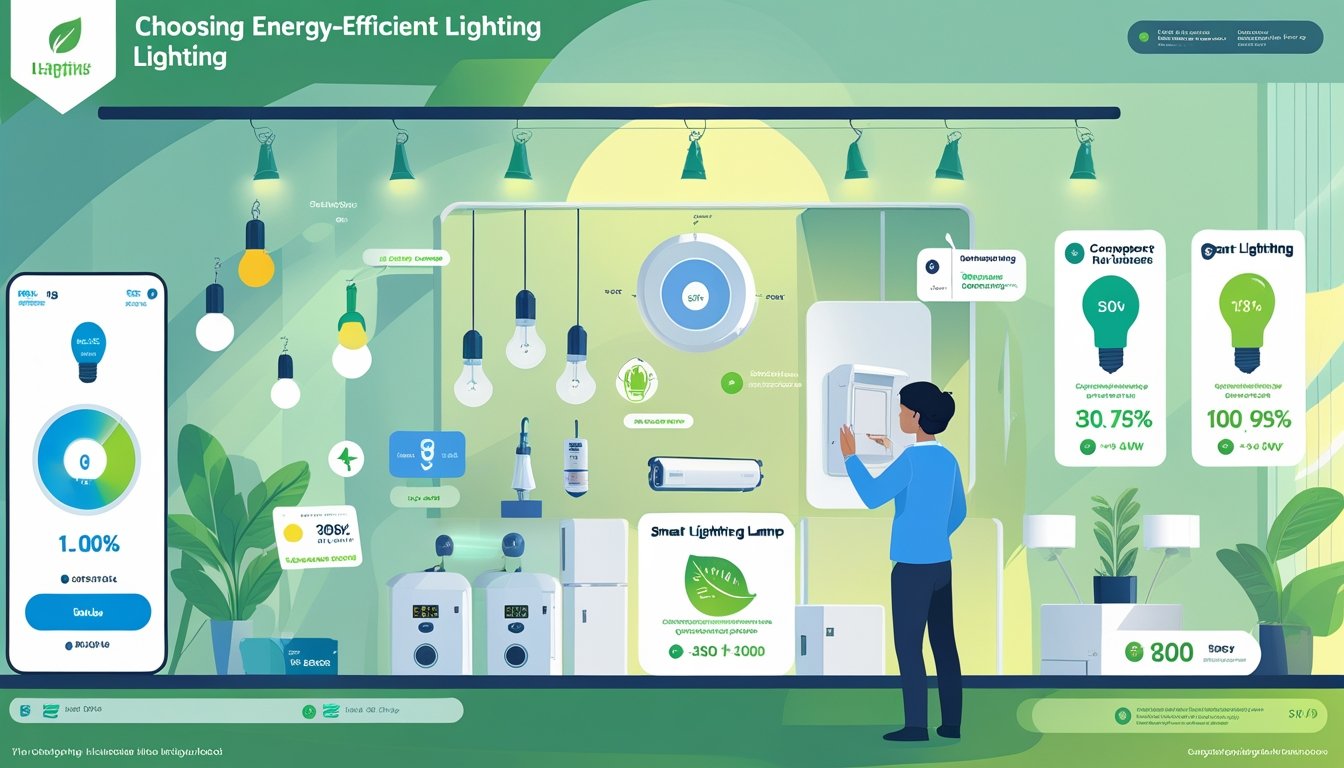
Choosing energy-efficient lighting fixtures helps you cut electricity bills and shrink your carbon footprint. The main thing? Go for LED lights. They use less energy, last way longer, and give you crisp, focused lighting. Less hassle, less waste, and you’ll notice the savings.
Want to do even better? Try smart lighting systems. You can tweak brightness, set timers, and only light up what you need, when you need it. At Magnify Electric, our licensed electricians can help you pick out fixtures that fit your style and energy goals—and set them up for you.
Understanding Energy-Efficient Lighting
Energy-efficient lighting saves power, trims your bills, and still gives you good light. Once you know how these fixtures work and what they offer, it’s a lot easier to pick the right ones.
What Makes a Fixture Energy-Efficient
An energy-efficient fixture just uses less electricity to get you the same amount of light as old-school bulbs. Usually, the design wastes less energy and produces less heat. The stars here are high-quality LEDs or compact fluorescents—they both sip power.
Look for labels like ENERGY STAR®. That’s a solid sign the fixture meets real energy-saving standards. A good fixture should last longer too, so you’re not constantly swapping bulbs (which is nice for your wallet and your patience).
Our team at Magnify Electric can help you choose fixtures that actually fit your space and don’t waste energy.
Common Types of Energy-Efficient Technologies
Here’s what you’ll see most often:
- LEDs (Light Emitting Diodes): Up to 75% less energy than regular bulbs, and they last 25,000 hours or more.
- CFLs (Compact Fluorescent Lamps): About 70% less energy than incandescents, longer life, but there’s a tiny bit of mercury in them.
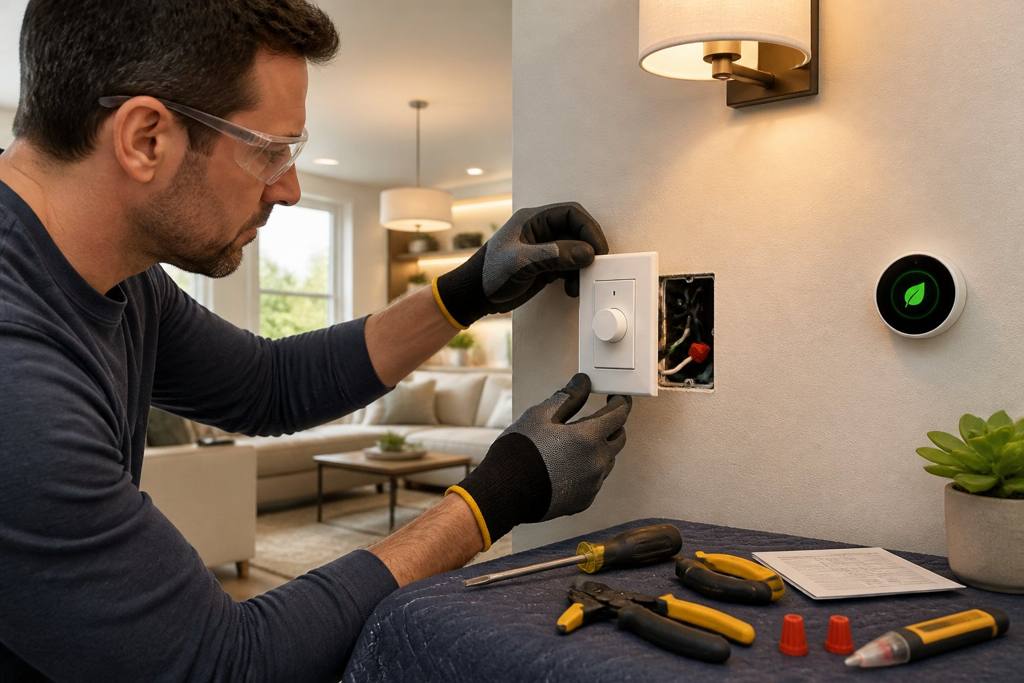
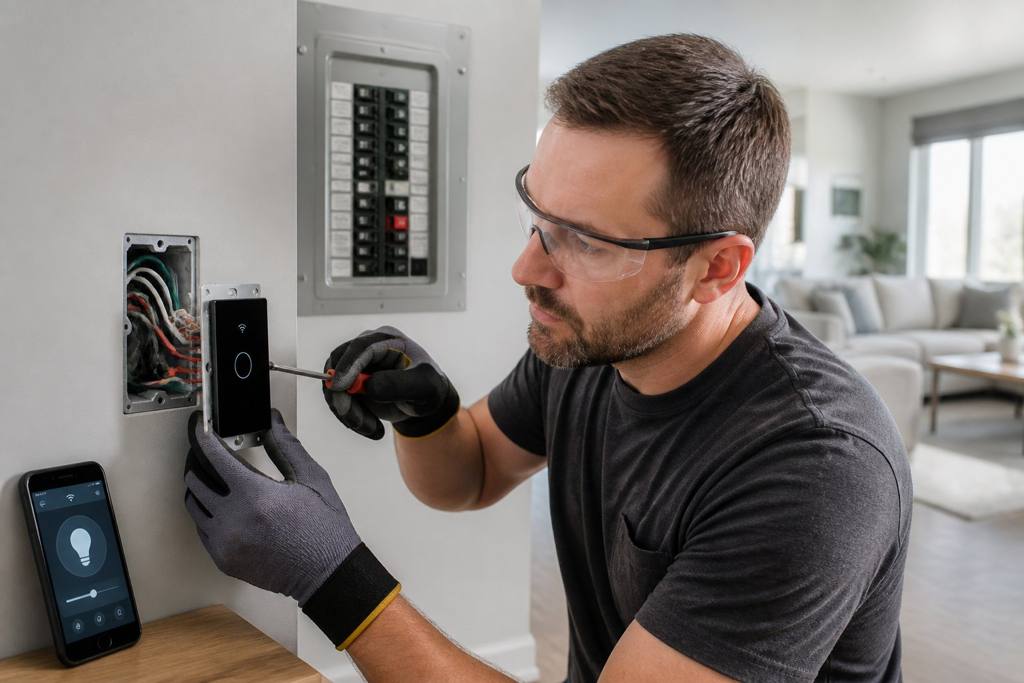
- Smart Switches: Control your lighting remotely or set schedules, so you’re not lighting up empty rooms.
LEDs are everywhere now, and for good reason—they’re efficient and stick around for years. Smart switches add convenience and save you from forgetting to turn off the lights.
Benefits of Choosing Energy-Efficient Lighting
Energy-efficient lighting cuts your power bills by using less juice for the same brightness. It’s good for the planet, too—less energy means fewer greenhouse gases.
Longer-lasting fixtures mean you’re not constantly changing bulbs or tossing them out. Plus, these lights don’t pump out as much heat, so your AC doesn’t have to work as hard. That’s another win for your wallet.
Magnify Electric’s licensed team can upgrade your lighting so you get the best options for your home or business.
Assessing Your Lighting Needs
Before you go fixture shopping, take a minute to think about how you use each room and what kind of light actually makes sense there.
Determining Room Purpose and Light Levels
Start with what you do in the room. Kitchens need bright light for cooking; living rooms, not so much—softer, cozier lighting works there.
You can measure light levels in foot-candles or lumens. Kitchens are usually fine at 70–100 foot-candles, bedrooms can be way lower, like 10–20. This helps you pick fixtures that do the job without wasting energy.
Don’t forget about natural light. If a room gets a lot of daylight, you might not need strong artificial lighting all day. Fixtures with dimmers are great for this.
Evaluating Existing Lighting Layouts
Take a look at where your current fixtures are. Are there dark corners or spots that feel like a spotlight? If the lighting’s uneven, you might need to move things around or add a fixture or two.
Check how your switches work. If you’ve got multiple switches, you can control lighting in different zones and save energy by only lighting up what you need.
Magnify Electric can help you review your setup and figure out how to make it more efficient and comfortable.
Considering Task Versus Ambient Lighting
Task lighting is for places where you need to see clearly—like a desk or kitchen counter. It should be focused and bright.
Ambient lighting is the background light that fills the whole room. You want it soft and even, not harsh.
Mix both types to save energy. Maybe put in LED recessed lights for overall brightness and add a desk lamp for focused tasks. That way, you don’t have to turn on every light in the room just to see what you’re doing.
Comparing Lighting Fixture Types
The right fixture can save you energy and money. Different types work better for different spaces and needs, so it’s worth knowing the basics.
LED Fixtures
LED fixtures are hands-down some of the most energy-efficient options out there. They use less power, last way longer than old bulbs, and come in a bunch of styles—recessed, ceiling, outdoor, whatever you need.
LEDs don’t get hot and give you consistent, bright light. No annoying flicker or buzzing, either. Plus, you can pick warm or cool tones to match your vibe.
Magnify Electric’s electricians can set up your LED fixtures safely and make sure you get the best lighting and savings.
CFL Fixtures
Compact Fluorescent Lamps (CFLs) are better than incandescents but not as efficient as LEDs. They use about 75% less energy than old bulbs and last longer, but they do have a bit of mercury inside, so you’ll need to dispose of them carefully.
CFLs take a second to warm up and sometimes flicker at first. They’re usually cheaper upfront than LEDs but don’t last as long. If you’re replacing old fluorescent lights, CFLs can be a decent stopgap, but honestly, LEDs are usually the smarter move these days.
If you’re not sure what’ll work in your space, Magnify Electric can help you sort it out and keep everything up to code.
Smart Lighting Options
Smart lighting is where things get interesting. Most use LED bulbs, but you also get features like dimming, color changes, and control through apps or voice assistants.
You can set up schedules so lights turn off when nobody’s around or adjust the brightness to save energy. Some systems even learn your habits and do it for you.
Smart lighting can cost more upfront, but the control and savings usually make up for it. If you want to try it but aren’t sure where to start, Magnify Electric can help with both advice and installation.
Evaluating Fixture Performance
When you’re picking energy-efficient lighting, keep an eye on how much light you get, how long it’ll last, and whether it works with dimmers or lets you pick the color temperature.
Lumens Versus Watts
Lumens tell you how bright the light is. Watts just show how much power it uses. For energy efficiency, you want more lumens with fewer watts.
For example, an LED bulb with 800 lumens at 10 watts gives you the same brightness as a 60-watt incandescent, but uses way less power. Always check the packaging for lumens, not just watts.
Lifespan and Maintenance
Go for fixtures with long-lasting bulbs. LEDs can last 15,000 to 25,000 hours, so you’re not running to the store every few months.
Modern fixtures are easier to take care of—LEDs run cooler and don’t break as easily. If you want something low-maintenance, Magnify Electric can help you find the right fit.
Dimmability and Color Temperature
Dimmable fixtures let you set the mood and save energy when you don’t need full brightness.
Color temperature is about the feel of the light. Warm light (2700K–3000K) is cozy, great for living rooms and bedrooms. Cooler light (4000K–5000K) is bright and crisp, better for workspaces.
Magnify Electric's licensed electricians can help you pick and install fixtures that actually fit your daily life.
Understanding Energy Labels and Certifications
Picking out energy-efficient lighting gets easier if you know what the labels and certifications mean. These marks tell you if a fixture meets certain standards, so you’re not guessing about quality or savings.
ENERGY STAR Ratings
ENERGY STAR is the big one. If you see this label on a fixture, it means the product uses less energy but still gives you good light. These bulbs usually last longer and save you money on your bill.
To get ENERGY STAR, products have to pass serious tests—energy use, brightness, and heat output all get checked. For example, LED bulbs with this label use at least 70% less energy than old bulbs.
If you stick with ENERGY STAR, you’re getting something that’s been tested for both savings and performance.
Other Trustworthy Certifications
There are a few other marks to look for. Certifications from the DesignLights Consortium (DLC) or UL (Underwriters Laboratories) mean the product meets tough standards for safety and efficiency.
DLC is mostly about commercial lighting and focuses on cutting power use and boosting lighting quality. UL shows it’s been tested for safety.
These certifications help you avoid junky or unsafe fixtures. If you stick with certified products, your lights should last and save energy.
How to Read Energy Labels
Energy labels usually list wattage, lumens, and color temperature:
- Wattage: How much energy the light uses.
- Lumens: How bright it is. More lumens = brighter.
- Color temperature: (Kelvins) Lower numbers (like 2700K) are warm, higher numbers (4000K+) are cool.
Some labels also show the estimated yearly energy cost and how long the bulb should last.
Use this info to pick fixtures that fit your needs and save energy. If you want help, Magnify Electric’s licensed electricians can walk you through your options and handle installation for homes or businesses.
Calculating Long-Term Cost Savings
Thinking about energy-efficient lighting? Don’t just look at the sticker price. You’ll want to weigh upfront costs against energy use and figure out how quickly you’ll make your money back.
Upfront Costs Versus Ongoing Savings
Energy-efficient fixtures usually cost more at first. LEDs, for example, aren’t as cheap as old bulbs. But they use less power and last longer.
Lower power use means your monthly bills drop. Over time, those savings usually add up to more than what you paid upfront.
If you’re upgrading your home or business lighting, it’s worth thinking long-term. Magnify Electric’s licensed electricians can help you find options that match your budget and help you save energy for years to come.
Estimating Energy Consumption
If you want to see how much you’ll save, start by figuring out the energy your new fixtures will use. Just check the wattage on the box—lower watts means less electricity, plain and simple.
Multiply that wattage by how many hours you plan to use the light each day. Then multiply by 30 for a rough monthly usage. Compare that number to your old setup.
Say you’ve got a 10-watt LED running 5 hours a day. That’s 50 watt-hours daily, or about 1.5 kWh per month. If your old bulb was 60 watts doing the same, you’d use 9 kWh a month. That’s a difference you’ll notice on your bill.
This kind of math helps put real numbers to your savings. If you’re not sure where to start, Magnify Electric can walk you through it based on your own lighting habits.
Payback Period and ROI
The payback period is basically how long it takes for your savings to make up for the extra cost of the new fixture. Divide the price difference by your monthly savings from using less energy.
So, let’s say your new LED fixture costs $30 more than your old one, and you save $5 a month on your bill. You’d break even in 6 months ($30 ÷ $5).
Once you hit that point, the savings are yours. ROI just shows how much you’re getting back over time. If you want help crunching these numbers, Magnify Electric’s team is happy to help you make smart choices for your home or business.
Style and Design Considerations
Energy-efficient lighting isn’t only about cutting your power bill. You’ll want fixtures that actually work for your space and look good, too. The right style and smart placement can make all the difference.
Matching Fixtures to Your Decor
Think about your room’s vibe when picking fixtures. You want lights that don’t clash with your furniture or color scheme. Matching finishes—like wood, metal, or glass—keeps things cohesive.
If your kitchen is full of stainless steel, chrome or brushed nickel fixtures usually look right at home. For warmer wood tones, bronze or copper can work better.
Magnify Electric can help you find a style that fits. We get how to balance design with energy efficiency, so your space feels inviting without wasting power.
Fixture Placement for Efficiency
Where you put your lights matters—a lot. Task lighting should go where you need it most, like over counters or desks. That way, you don’t end up blasting the whole room with bright light for no reason.
Ambient lighting gives the room a soft glow, but it’s best if you can dim it. Accent lights are great for art or plants and don’t use much power since they’re focused.
Set up lighting zones and layer different types. It’s not as complicated as it sounds, and Magnify Electric can help design and install a setup that actually works for your space.
Installation and Compatibility Tips
When you’re picking out energy-efficient lighting, don’t forget to think about how it’ll fit with your existing setup. Sometimes it’s worth it to call a pro—it can save you a lot of headaches.
Ensuring Proper Fixture Fit
Before you buy, make sure the fixture will fit your space and match your wiring. Check the size, weight, and mount type—whether it’s recessed, flush, or pendant—so you don’t run into surprises.
Some LED lights need special dimmers, and not all wiring is compatible. For recessed fixtures, check the insulation contact (IC) rating if they’ll touch insulation—it’s a safety thing.
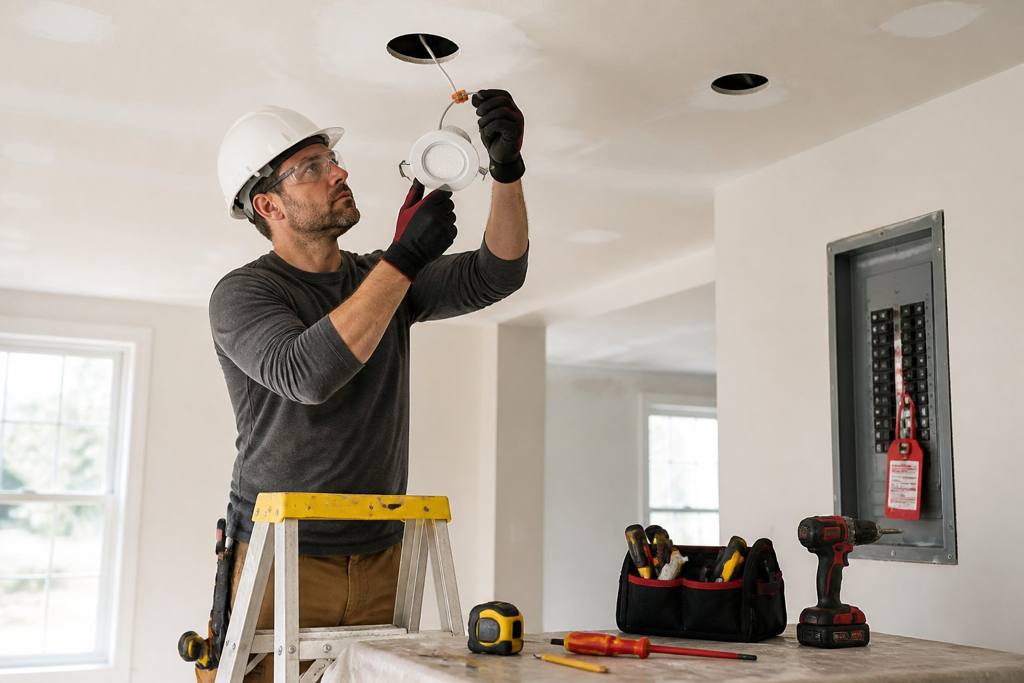
Always use a voltage tester before you start. You really don’t want to find out the power’s still on the hard way.
Professional Versus DIY Installation
A lot of lighting installs are DIY-friendly if you’re comfortable and careful. Swapping out a fixture or switch isn’t rocket science—just make sure you cut the power first.
But if you’re rewiring, adding new circuits, or upgrading to smart lighting, it’s usually best to get a licensed electrician. Magnify Electric’s team offers expert help for jobs big or small, so you don’t have to worry about codes or mistakes.
Honestly, sometimes hiring a pro just saves you time and keeps things safe—especially if you’re not totally sure what you’re doing.
Sustainable Practices in Lighting Choices
Energy-efficient lighting isn’t just about your bill—it’s also about the bigger picture. The right fixtures last longer, are easier to recycle, and cut down on waste and environmental impact.
Recyclability of Lighting Fixtures
Try to pick fixtures made from recyclable materials like glass, metal, or certain plastics. Mixed-material fixtures are harder to recycle, so they’re best avoided if you care about waste.
LED bulbs last longer and have fewer hazardous materials than old-school bulbs, and most recycling centers will take them.
Magnify Electric can help you choose lighting that’s both high-performing and easy to recycle. Our licensed electricians stick to safety standards, so you won’t have to replace faulty fixtures anytime soon.
Minimizing Light Pollution
Light pollution isn’t just an eyesore—it messes with the environment and your sleep. Go for fixtures that aim light downward instead of everywhere. It cuts glare and saves energy.
Timers, dimmers, and motion sensors can keep lights on only when you need them. That way, you’re not lighting up the whole neighborhood all night.
Magnify Electric can set up these smart controls to fit your routine. You’ll save money, protect the night sky, and keep your lighting efficient.
Summary and Next Steps
Energy-efficient lighting really does pay off—you’ll save money and use less energy. LEDs are a solid pick since they last forever and keep your bills down. When you’re choosing fixtures, think about style and light temperature so your rooms feel connected but still have their own thing going on.
Mix it up with floor lamps, sconces, and table lamps instead of just overhead lights. Layering your lighting gives you more control and a better feel for any space.
Ready to start? Here’s what you can do:
- Check your current bulbs and swap them for LEDs.
- Figure out where you want new fixtures or improve your lighting setup.
- Set a budget and look for efficient models.
If you want professional help or have bigger projects, Magnify Electric’s got you covered. Our licensed electricians handle everything, from swapping bulbs to new installs. We’re here to make your home or business safer and brighter.
Taking these steps will boost your lighting quality and cut energy waste. It’s a win-win—less hassle, more comfort.
Frequently Asked Questions
Picking the right energy-efficient lighting can help you save money and make your home more comfortable. Knowing the basics about bulb types, costs, and features makes shopping a lot easier.
What are the top energy-saving light bulb types for my home?
You’ve got a few options: LEDs, CFLs, and halogens. LEDs are the champs for energy savings, lifespan, and compatibility with most fixtures. CFLs save energy too, but they don’t last as long and have a bit of mercury.
Which is more cost-effective in the long run, CFL or LED bulbs?
LEDs win here. They use less energy and can last up to 25,000 hours or more. CFLs are cheaper at first but burn out quicker, so you’ll probably replace them more often.
Can changing to LED lights significantly reduce my monthly electricity costs?
Definitely. Switching to LEDs can cut your lighting energy use by up to 75% compared to old bulbs. If your place has a lot of lights, you’ll see those savings add up fast.
What are some lesser-known benefits of switching to energy-efficient lighting?
Energy-efficient bulbs don’t get as hot, so your home stays cooler—maybe you’ll even run the AC less. They last longer, so you’re not climbing ladders to swap bulbs all the time.
How do different energy-saving light bulbs compare in terms of lifespan?
LEDs usually last between 15,000 and 50,000 hours. CFLs are around 8,000 to 10,000 hours. Halogens check out much sooner, at about 2,000 to 4,000 hours. Longer lifespan means fewer replacements and less hassle.
What features should I look for to ensure a lighting fixture is truly energy-efficient?
Start with fixtures that use LED bulbs—they’re just way more efficient than the old options. Good heat dissipation matters too, since it helps the bulbs last longer. If you spot an ENERGY STAR label, that’s a pretty solid sign the fixture meets strict efficiency standards. You might also want to look for lights that play nicely with dimmers or smart controls, since those can cut down on your bills even more.
If you’re not sure where to start, Magnify Electric has licensed electricians who know their stuff—residential or commercial, it doesn’t matter. Need a quick fixture swap or a whole new setup? We’re here to help, and we’ll get it done right.